We no longer update this blog

For our CURRENT BLOG visit our website: http://www.gaiacreationsecoland.com/blog
________________________________________

Thursday, August 5, 2010

Dragonflies and Damselflies


Both dragonflies and damselflies are considered a gardener's friend as they eat mosquitoes and other flying pests.  They require a source of water if you want them to stick around year after year; and it can take them a long time to mature!  Some spend as long as five years in the aquatic larval stage (eating mosquito larvae then too!).

While the images here are less than wonderful quality one gets the understanding of the diverse patterns and shapes dragonflies and damselflies take on.   

Quite a magical sight on a summers evening watching them dip and dive...


Sunday, August 1, 2010

Mentha

MINT -Mentha species

Mint has been used for thousands of years as a remedy for digestive ailments and as a flavor for food. The leaves and stems can be used fresh or dried; they are harvested for drying in August as the flowers start to open.  Mint is a rhizomatous perennial plant grown for its culinary and medicinal properties or just for ground cover.  

Pollinator insects, specifically honey bees, favor mint flowers.  All Mentha species are very prone to hybridization (seed does not always breed true) thus the content of medicinal oils vary with each new generation. If you want to keep a particular aroma of mint in your gardens it’s best to propagate them by cuttings or division.

Spearmint Mentha spicata - L.
The original European mint, the name 'spear' mint comes from the pointed leaf tips.  Many hybrids today are some form of spearmint cross.  Besides the normal digestive therapy mint provides, the stems are also used as a poultice on bruises.

Peppermint Mentha x piperita
A natural hybrid of M. aquatica x M. spicata peppermint cannot bear viable seed so must be propagated by cuttings or division.  The essential oil, menthol, is obtained from the whole plant, is considered an antiseptic, strongly antibacterial and toxic in large doses.

Applemint Mentha x rotundifolia
A very vigorous mint, applemint effectively out-competes Bermuda grass.  We use applemint as a tool when forest gardening and find it aggressive enough to dominate over weeds like Bermuda grass but easily removed too. 


‘Wintermint’ Mentha spicata x rotundifolia
A natural hybrid of M. rotundifolia x M. spicata –we speculate; this particular variety germinated mid-winter a few years ago amongst the last potatoes.  The leaves appear similar to spearmint but the flavor is sweeter and mild, more like the applemint.


Spearmint Mentha spicata - L.


Applemint Mentha x rotundifolia
Peppermint Mentha x piperita
Wintermint Mentha spicata x rotundifolia

Thursday, July 1, 2010

To honor our pollinating friends here is a tidbit of trivia about...

Honey Bees

There are three types of Honey Bees in the hive...

Worker, Queen and Drone

Worker bees are all female and make up about 85% of hive bees.  Workers gather flower nectar and pollen; the pollen they carry in special pollen "baskets" on their hind legs.  Pollen provides the colony with vital amino acids, vitamins, fats and the enzymes necessary for making honey.  Workers also decide which bees in the hive will become queens.

The males or drones have one purpose in life: to mate with the queen; but there are distinct disadvantages to being a male.  When food supplies are low or before Winter, workers may kick drones out of the nest.  Worse yet, if a drone is so lucky as to mate with a queen he dies immediately after.  What a life...

Honey Bee Fun Facts:
  • Bees do not create honey; they are actually improving upon a plant product, nectar. The honey we eat is nectar that bees have repeatedly regurgitated and dehydrated
  • The term "honey moon" originated with the ancient Norse practice of consuming large quantities of Mead during the first month of a marriage.  Mead is a fermented beverage made from honey.
  • Honeybees are the only bees that die after they sting
  • Bees can recognize individual human faces (We really believe this, our sons rescue 1000's of bees and never get stung -the bees know them!)
  • Honeybees never sleep!
For more information on bees and their benefits to our gardens and our planet visit this excellent (external) website.

Monday, June 14, 2010

Pear Tree Guild

Included are types of plants chosen for their specific functions and interactions with the floral and fauna community as a whole.
FUNCTIONAL DIVERSITY
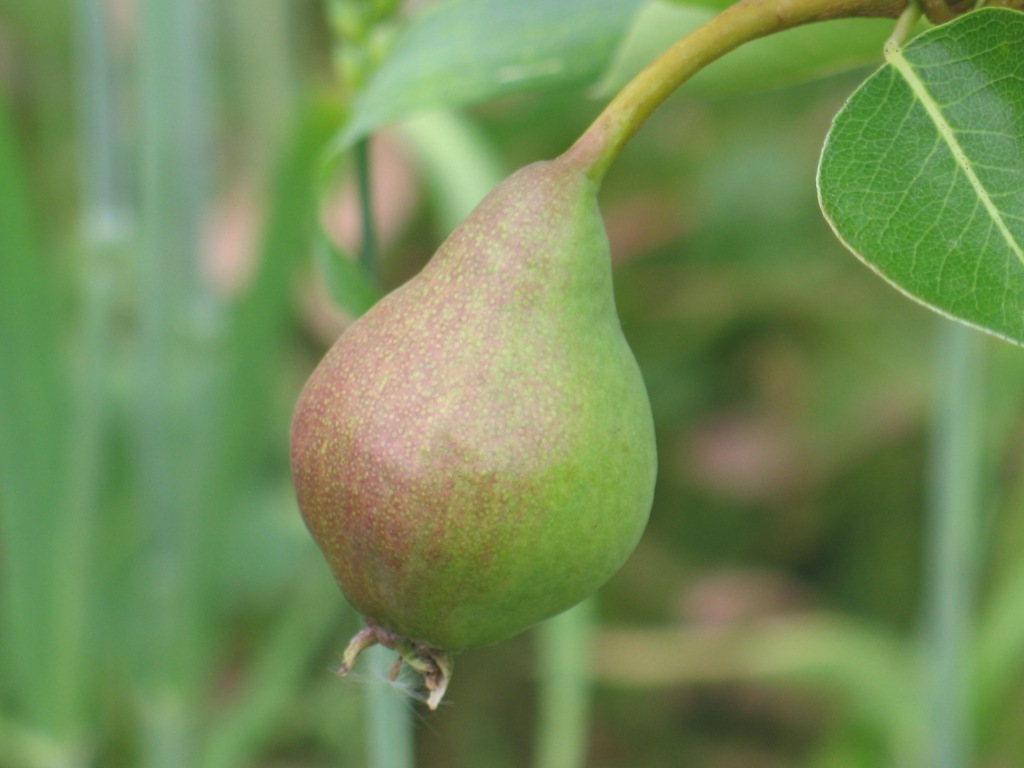
  • Bartlett Pear -central guild species; provides edible fruit, pollen & nectar, shade, wood...
  • Apple & Spearmint -bermuda grass control, edible, insectary (provides food or shelter)...
  • Borage -dynamic accumulator, insectary, tea...
  • Columbine -native, edible, medicinal, insectary...
  • Dandelion -dynamic accumulator (deep tap root), insectary, edible (dandelion wine!)...
  • Daylily -edible (flowers and roots -boiled like potatoes), insectary...
  • Crimson clover -nitrogen fixation (legume), soil cover, insectary, edible flowers...
  • Calendula -garden tonic, medicinal, edible...
  • Scallions -aromatic pest confuser (strong smells confuse pests), edible, insectary...
 I CANNOT WAIT TO EAT THIS BEAUTY!